Home
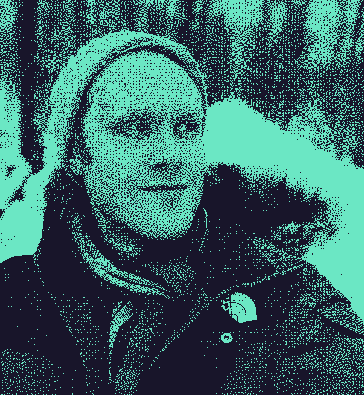
Hey I'm Eric
I am a senior software engineer with over 10 years of experience in full-stack development and data science. I specialize in scaling custom AI/ML models into robust, production-ready applications, and I have delivered solutions across startups, government institutions, and academic research labs.
Feel free to explore my skills, review my resume, or browse my publications. For code samples, please visit the GitHub link below.
Happy Hacking!
Skills
Languages

Rust
WebDev
Three.js

Flask
AI & Data Science

Scikit-Learn

SciPy

Pydantic AI

Dagster
DevOps
Mobile
Resume
Yale University, Dept. of Biomedical Informatics & Data Science
Senior Software Engineer
- Implemented edge bundling and visualization for MedViz, an application that maps the semantic space of biomedical literature.
- Created an agentic workflow for generating knowledge graphs for drug, gene and disease relationships.
- Engineered agentic ETL pipelines for extracting biomedical datasets as part of DataMed; an index enabling researchers to search, identify, and retrieve data for model training and scientific research. The pipeline features a multi-agent, self-healing execution loop that dynamically generates Dagster assets and manages end-to-end pipeline orchestration. To date, the system has indexed metadata for over 6.5 million datasets spanning 241 NIH repositories.
- Designed and built a data pipeline and API for the NIH Data Sharing Index (S-index) Challenge, aggregating repository datasets and authors to generate identifiers for AI-driven publication matching and enabling search via a dedicated S-index application.
Trinnex
Senior Full-Stack Developer
- Worked on LeadCAST, a platform used by water companies to visualize, track and schedule the replacement of water lines.
- Led the development of the replacement module, which maps and visualizes lead pipes, predicts lead statuses and tracks waterline inspections and replacements.
- Created an AI powered workflow for lead status predictions. This accelerated customer lead replacement programs by reducing the number of required inspections from thousands to hundreds.
- Implemented an event driven architecture to create export services that generate real time reports of replacements and water line inventories.
Infinitive Inc.
Senior Developer
- For our client Unite Us, a healthcare platform, revamped the provider onboarding services workflow and reduced the process down from days to hours. This had a significant impact by increasing the new customer acquisition rate by 30%.
- Created an organization deduplication service for the ETL pipeline which eliminated the need for manual review.
- Developed a pose detection neural network to classify golf swings using Pytorch and Sagemaker.
Artemis Consulting
Python Developer
- Contractor for the Library of Congress’ Chronicling America project: a digital collection of over 2.6 million newspaper scans curated by libraries and universities throughout the country.
- Implemented the batch download service leveraged by LOC archivers to rapidly download collections of data including PDF scans, OCR text and categorical data.
- Created a D3.js geo-visualization of newspaper collections by library/awardee. Users can filter by an array of facets and see their results displayed on the map.
- Extended a OCR based highlighting microservice to include non-English characters for passages in languages such as Hebrew and Arabic.
Duke University, Curtarolo Materials Lab
Research Assistant
- Maintained, deployed and developed applications for AFLOW, a materials analysis platform and database of over 3.9 million material structures with 817 million properties.
- Co-developed predictive models for the electronic and thermal properties of materials. Modeling techniques include graph convolutional neural networks, XGBoost and traditional methods.
- Created AFLOW ML, a Python library and REST API of predictive models for superconductivity, and metal and insulator classification. Users include researchers at Hyundai, UNC Chapel Hill and The Office of Naval Research.
Yale University, Schroers Lab
Freelance Developer
- Developed the prototype for The Materials Atlas Project, an application that allows research groups store and visualize characterization data of metallic glasses.
- Visualizations using D3.js and Three.js include ternary plots, composition gradients and interactive sample library overviews which display optical images when selecting a specific point.
The Research Center on Computing & Society, Southern Connecticut State University
Web Developer
- Mantained the Wordpress site for the The Research Center on Computing & Society. Duties included updating pages, generating content and maintaining the site.
- Led a full site migration to a new server, upgraded WordPress, and resolved all plugin versioning and compatibility issues.